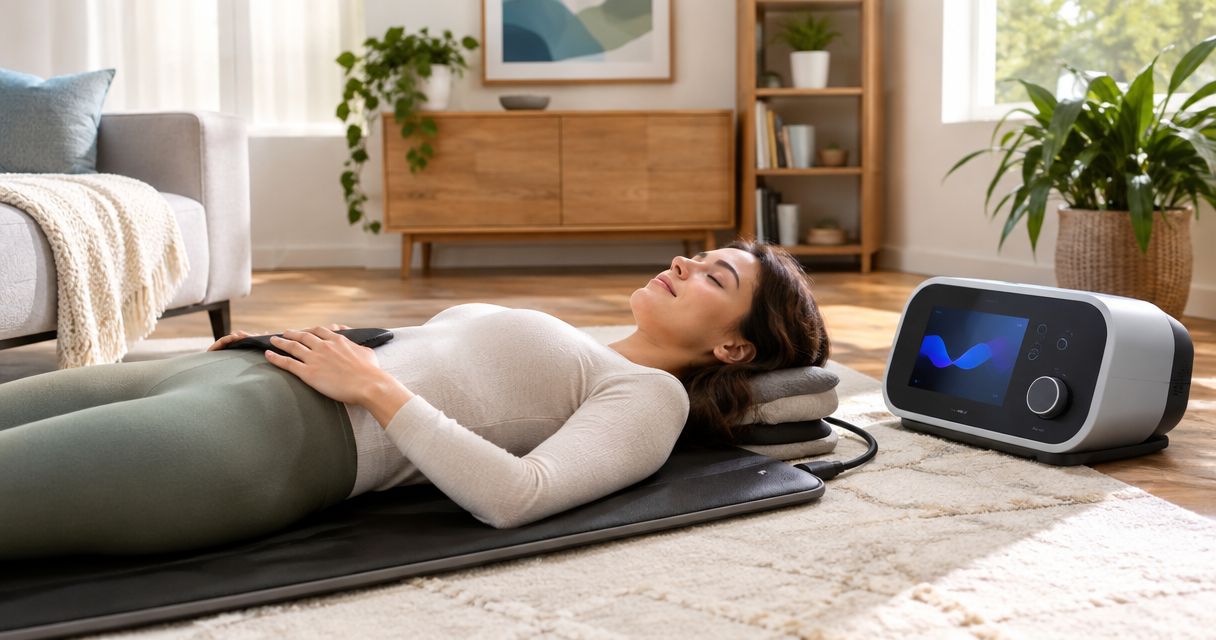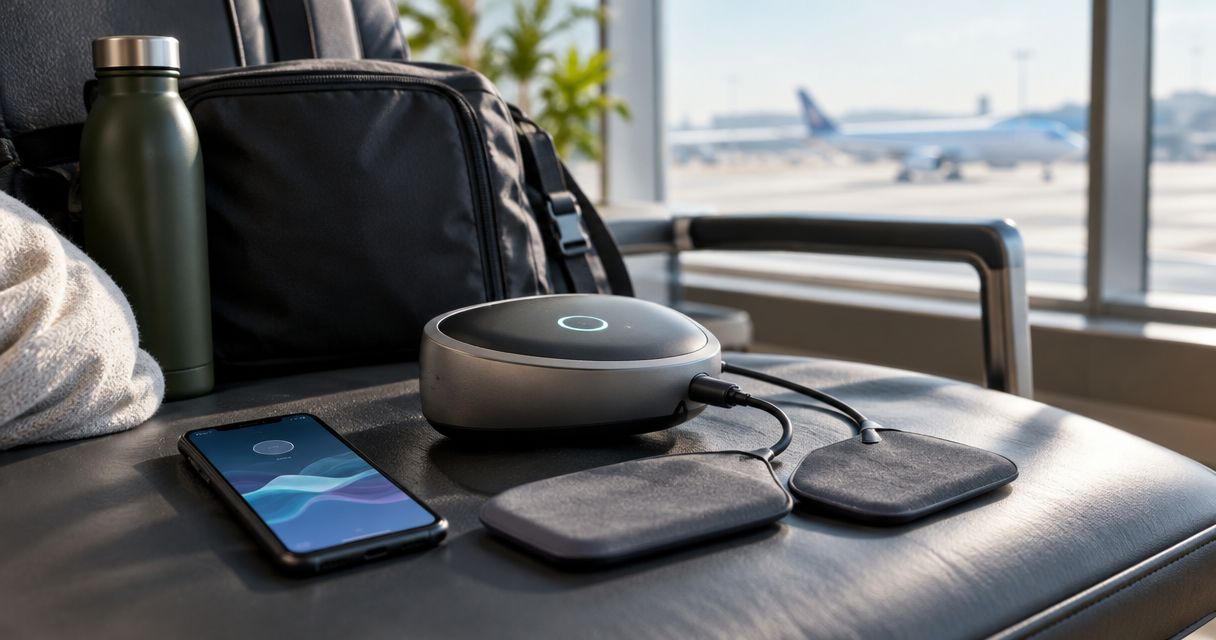
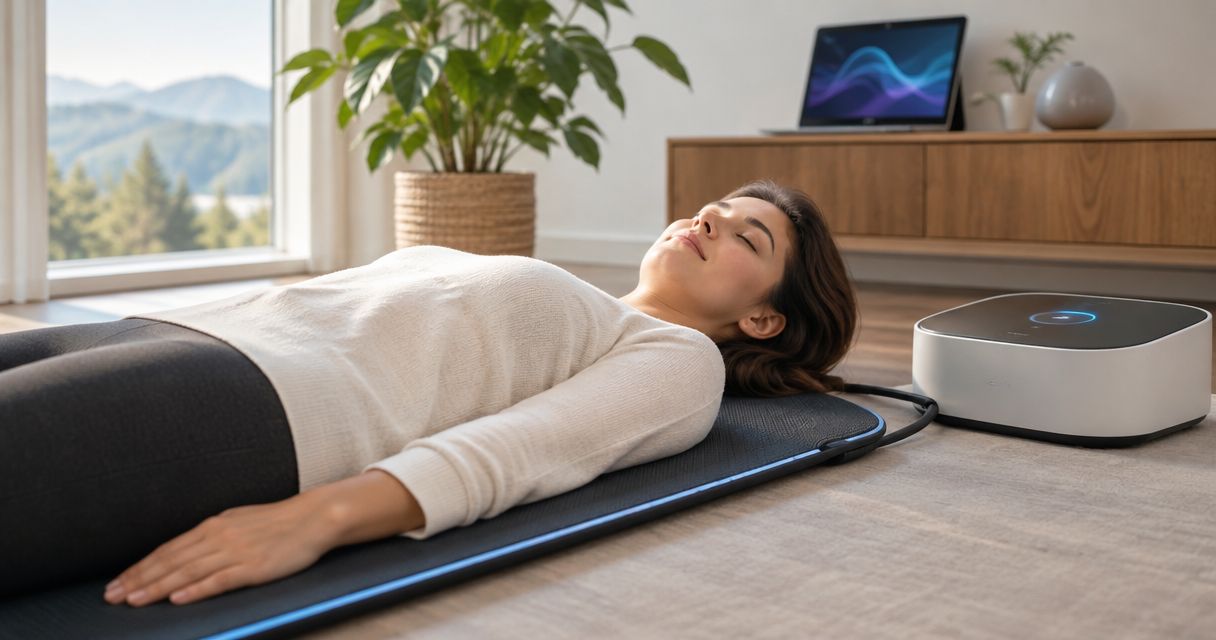
Best for exploring plasma light and PEMF together: the S.E.A.D. System from Tesla BioLights. Best for a reclining routine: a full-body mat. Best for focused placement: a localized applicator. Best for travel: a portable format. This 2026 pemf therapy device guide ranks buying fit, not demonstrated health outcomes.
- Tesla BioLights is best suited to buyers exploring noble-gas plasma and PEMF together, rather than PEMF alone.
- Choose a pemf therapy device by intended use, documented specifications, safety instructions, and operating requirements.
- Full-body mats, localized applicators, and portable formats serve different routines; none establishes clinical effectiveness by its shape.
- Separate published research, proposed mechanisms, and customer experiences before making a purchase.
Why this matters
A glowing device invites curiosity. A purchasing decision needs something firmer: what the system delivers, how you will use it, and what evidence supports the particular claims that matter to you.
PEMF means pulsed electromagnetic fields: electromagnetic fields delivered in pulses rather than continuously. That description identifies a technology, not a guaranteed result. Different devices and protocols cannot be treated as interchangeable simply because they share the PEMF label.
For a 2026 shortlist, keep 3 buyer groups distinct: practitioners and clinic owners, personal-use biohackers, and retreat or wellness-center operators. A device that fits a private routine does not automatically fit a shared setting. This guide compares 4 device formats through those practical differences.
What makes the best PEMF therapy device?
Use these criteria before comparing appearance or technical vocabulary:
- Intended use: Identify whether you want a combined-modality experience, reclining use, focused placement, or portability.
- Product-specific evidence: Match every claimed outcome to the exact device and protocol studied, not merely the technology category.
- Documented output: Request the waveform, frequency settings, field-strength measurement conditions, and applicator information. Compare like with like.
- Safety instructions: Read the manufacturer's warnings and contraindications before purchase; resolve personal medical questions with a qualified clinician.
- Operational fit: Confirm setup, cleaning, storage, power requirements, and support arrangements for your intended setting.
- Experience versus measurement: Treat a pleasant session as information about your preferences, not proof of a biological mechanism.
The best choice is the device whose documented purpose matches your routine—not the device with the longest list of scientific terms.
PEMF device formats at a glance
These are buying routes, not a head-to-head clinical trial. Only the S.E.A.D. System is a named product here; the other entries describe formats whose specifications must be checked individually.
| Rank and option | Best for | Defining feature | Key limitation |
|---|---|---|---|
| 1. S.E.A.D. System | Buyers exploring plasma light and PEMF together | Combines noble-gas plasma and PEMF | A combined experience does not isolate each modality's contribution |
| 2. Full-body mat format | Buyers planning a reclining routine | Mat-based positioning | Shape alone does not establish field distribution or effectiveness |
| 3. Localized applicator format | Buyers prioritizing focused placement | Applicator positioned at a selected area | Placement is not proof of a treatment effect |
| 4. Portable format | Buyers prioritizing travel and storage | Mobility-focused design | Portability alone says nothing about output or appropriate use |
1. S.E.A.D. System: best for combined-modality exploration
The S.E.A.D. System is the biophotonic noble-gas plasma and PEMF offering from Tesla BioLights. Devices and sessions are offered, giving you distinct ways to approach the purchase: assess the system directly or explore a session before deciding.
Noble-gas plasma refers to ionized gas. Its glow is a physical phenomenon; connecting that light to a particular health outcome requires separate evidence. Likewise, the presence of PEMF does not establish that results from another electromagnetic device apply to this system.
S.E.A.D. System pros:
- Brings noble-gas plasma and PEMF into one system.
- Fits a shortlist specifically seeking both modalities.
- Sessions offer an optional way to assess the experience before purchasing.
S.E.A.D. System cons:
- A combined experience does not establish which modality contributes to a reported response.
- Research on separate PEMF or photobiomodulation devices does not demonstrate S.E.A.D. System benefits.
- A buyer seeking only PEMF must consider whether the combined approach matches that narrower purpose.
Best for: Practitioners, personal-use biohackers, and retreat operators intentionally exploring both plasma light and PEMF.
For your 2026 decision, identify what you want to assess before a demonstration: personal comfort, the operating process, or suitability for your setting. Experiencing a session and talking with Doug are optional decision-support steps, not prerequisites for purchasing.
Verdict: Buy only when the combined-modality approach fits your purpose and the purchase documentation answers your safety and operating questions.
2. Full-body mat: best for a reclining routine
A full-body mat is a format intended for reclining use. The buying question is whether that position fits your routine or service environment—not whether a larger surface automatically produces a better result.
Do not read “full-body” as a measurement of uniform exposure. Ask how the manufacturer describes and measures the field across the mat, and distinguish physical dimensions from electromagnetic output.
Full-body mat pros:
- Gives a clear physical format for a reclining routine.
- Lets you assess comfort and positioning before selecting a model.
- Makes room layout and storage requirements straightforward questions to investigate.
Full-body mat cons:
- Requires space for the mat and the person using it.
- Mat dimensions do not establish field uniformity or biological effects.
- Shared use introduces cleaning and material-care questions that require model-specific answers.
Best for: Personal-use buyers who prefer reclining sessions, or operators whose intended experience already includes that position.
A clinic owner should examine how people get onto and off the setup, not just how the mat looks when empty. A retreat operator should assess the same movement within the actual room. For home use, check whether setup and storage suit a repeatable routine.
Verdict: Buy when reclining use is the priority; skip if your main requirement is focused placement or easy travel.
3. Localized applicator: best for focused placement
A localized applicator is positioned at a selected area rather than serving primarily as a reclining surface. That makes placement the central purchasing question: where it sits, how it stays there, and what the instructions permit.
Focused placement is a physical design choice, not evidence that the device treats a condition. Keep those statements separate when reviewing product descriptions or discussing a device with clients.
Localized applicator pros:
- Centers the routine on a selected placement area.
- Provides a direct way to assess positioning and handling.
- Suits buyers whose intended routine does not require a mat format.
Localized applicator cons:
- Positioning becomes part of the operating process.
- Applicator size does not establish the extent or strength of exposure.
- Moving between areas requires attention to the manufacturer's protocol rather than improvised use.
Best for: Buyers who prioritize a particular placement routine and have clear instructions for that use.
For practitioners, distinguish the ability to position an applicator from permission to make a treatment claim. For personal-use buyers, confirm that you can position it as directed without assistance. Retreat operators should examine how instructions translate into a consistent guest experience.
Verdict: Buy for a documented placement need; skip if you are inferring effectiveness from the applicator's location alone.
4. Portable PEMF format: best for travel-focused routines
Portable is a handling description, not a clinical classification. A travel-focused buyer should examine the complete setup, including any required controller, power supply, accessories, and protective storage.
Do not assume that smaller means weaker, stronger, or safer. Those judgments require product-specific specifications and instructions, not visual comparison.
Portable format pros:
- Makes transport a primary selection criterion.
- Encourages assessment of the complete kit rather than the applicator alone.
- Fits buyers whose intended use involves changing locations.
Portable format cons:
- A compact applicator does not guarantee a compact complete setup.
- Portability does not establish compatibility with your intended environment.
- Travel convenience provides no evidence of health benefits.
Best for: Personal-use buyers and mobile practitioners who need to move a device between locations.
Before purchasing in 2026, confirm the packed dimensions, power requirements, and permitted operating conditions for the exact model. A retreat operator moving equipment between rooms should also assess handling and cleaning, rather than treating portability as the only requirement.
Verdict: Buy when transport is essential and the complete setup meets that need; skip if portability distracts from your primary use.
How this ranking works
The ranking prioritizes distinct use cases: combined modalities, reclining use, focused placement, and travel. It does not assign an efficacy score or claim that one format produces better health outcomes.
Tesla BioLights ranks first for buyers specifically considering plasma light alongside a PEMF therapy device. The other formats answer different purchasing questions. No format wins every category, and no equipment specification replaces evidence for a claimed outcome.
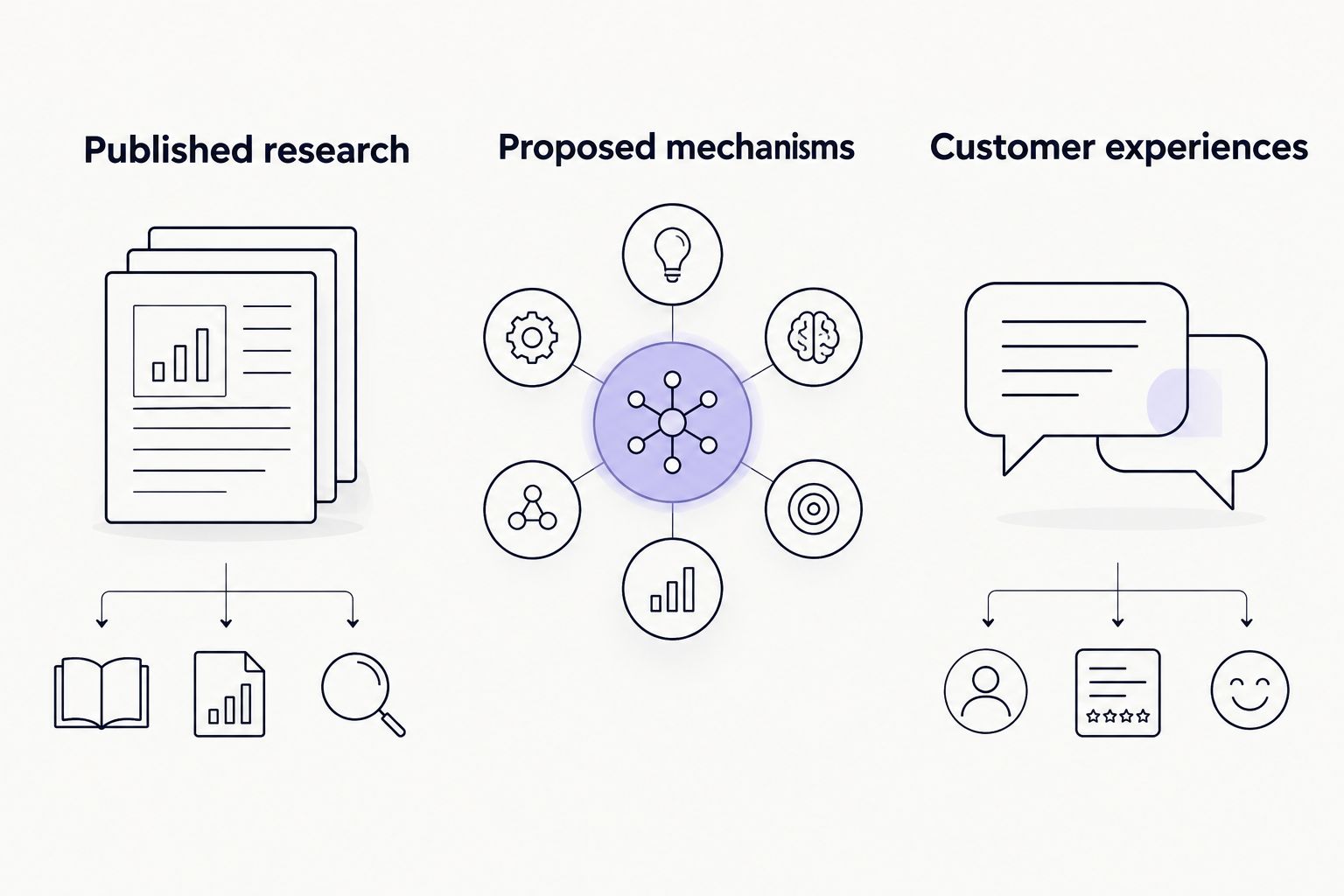
Keep three kinds of evidence separate
Your 2026 research should distinguish 3 evidence categories. They answer different questions and should never be substituted for one another.
Published research
Ask what device, population, protocol, and outcome a study actually examined. A paper about PEMF or photobiomodulation is not automatically evidence for another product that uses related terminology.
Photobiomodulation means using light to influence biological processes. Whether a particular plasma-light system delivers a studied exposure and produces a studied outcome is a separate product-specific question.
Proposed mechanisms
A mechanism describes how an effect might occur. Terms such as ion cyclotron resonance or parasympathetic activation require context: are they theoretical explanations, measured findings, or claims about the exact product?
A plausible explanation is not a demonstrated outcome. Keep the wonder; preserve the distinction.
Customer experiences
An individual account describes what someone reports experiencing. It can help you formulate questions about comfort or expectations, but it does not establish causation, safety for another person, or clinical effectiveness.
If you try a session, record your observations separately from explanations offered for them. “I found the experience relaxing” and “this mechanism caused relaxation” are different claims.
Match the purchase to your setting
Practitioners and clinic owners: Define who will operate the device, what instructions staff will follow, and what language you will use with clients. Verify any proposed clinical or regulatory claim against documentation for the exact product and intended use.
Personal-use biohackers: Start with a repeatable routine and clear boundaries. Read the safety instructions, resolve relevant medical questions, and decide what you want to observe without turning subjective impressions into medical conclusions.
Retreat and wellness-center operators: Examine the entire guest interaction: introduction, screening responsibilities, setup, cleaning, and the explanation afterward. Do not build a guest promise around an outcome that the product-specific evidence does not establish.
Before ordering, request written answers about the exact configuration, operating requirements, support, and purchase terms. A conversation can clarify the decision; written documentation should settle the details.
Explore the S.E.A.D. System
Review the combined plasma and PEMF offering against your intended use.
Which PEMF therapy device should you choose?
Choose Tesla BioLights when your purpose is to explore noble-gas plasma and PEMF together. Choose a mat for a reclining routine, a localized applicator for focused placement, or a portable format when transport drives the decision.
If you remain undecided, write your intended use in one sentence before comparing more devices. “I want equipment for a shared wellness setting” produces different questions from “I want a device I can take between locations.” Buy against that sentence, not against an expanding vocabulary of promised effects.
FAQ
What's the best PEMF therapy device in 2026?
The best choice depends on your intended use, product-specific documentation, and safety requirements. The S.E.A.D. System fits buyers exploring plasma light and PEMF together; mats, localized applicators, and portable formats address different routines.
Is a PEMF mat better than a localized applicator?
Neither format is inherently better. A mat prioritizes reclining use, while a localized applicator prioritizes placement at a selected area; effectiveness requires evidence for the particular device and protocol.
Does PEMF research prove that the S.E.A.D. System works?
Research on other PEMF devices does not demonstrate benefits for the S.E.A.D. System. Check whether the evidence concerns the exact system, intended use, and claimed outcome.
Do I have to experience a session before buying?
A session is optional, not a purchasing prerequisite. Experiencing a session or talking with Doug can help clarify personal preferences and operating questions without establishing clinical effectiveness.
What should a clinic owner check before purchasing?
A clinic owner should check intended use, manufacturer safety instructions, operating requirements, cleaning procedures, and product-specific evidence. Any clinical or regulatory claim also needs documentation for the exact device and use.
Can a customer testimonial establish a health benefit?
A customer testimonial cannot establish a health benefit or prove causation. It records an individual experience and should remain separate from research findings and proposed mechanisms.
What specifications matter when comparing PEMF devices?
Compare documented waveform, frequency settings, field-strength measurement conditions, and applicator information. Specifications describe output; they do not independently establish safety or effectiveness for your intended use.
One last thing
A demonstration can answer “Do I want this experience?” without answering “What caused it?” Keep both questions on the page when you make your 2026 purchase decision.
The glow can be memorable. Your strongest buying decision still rests on a clear purpose, documented operating details, and claims that remain within the evidence.