Best fit for a combined plasma-and-PEMF shortlist: the Tesla BioLights S.E.A.D. System. Best category for a PEMF-only brief: dedicated PEMF equipment. Best category when moving between rooms is essential: portable PEMF equipment. This 2026 guide helps clinic and spa owners choose the right purchasing route without confusing a technology label with evidence of benefit.
- Tesla BioLights S.E.A.D. System belongs on the shortlist for buyers seeking both noble-gas plasma and PEMF.
- Compare PEMF devices for clinic owners by intended use, product-specific evidence, safety instructions, and operating requirements.
- Dedicated and portable PEMF equipment are buying categories here, not verified model recommendations.
- An optional session or conversation with Doug can support your decision; neither establishes clinical efficacy.
Why this matters
A clinic device becomes part of your service, staff workflow, and client communication. Your purchasing decision needs to cover all three. A compelling explanation of electromagnetic fields does not establish that a particular device produces a particular result.
Tesla BioLights S.E.A.D. System is a shortlist choice for clinic owners specifically seeking combined noble-gas plasma and PEMF. That is a fit-based recommendation, not a claim that it outperforms other devices or treats a medical condition.
For your 2026 shortlist, separate the equipment question from the evidence question. First establish what you intend to offer. Then establish what the specific product's documentation supports you saying about it.
What makes the best PEMF devices for clinic owners?
Judge equipment against these criteria before comparing names:
- Service fit: Decide whether you want PEMF alone or a combined plasma-and-PEMF offering. More modalities are not automatically a better match.
- Product-specific evidence: Look for research on the exact device and intended use. Research on another device or a general modality does not transfer automatically.
- Safety instructions: Review the manufacturer's current instructions, warnings, contraindications, and intended users before planning sessions.
- Operating requirements: Establish setup, cleaning, storage, staff responsibilities, and room requirements from product documentation.
- Purchase support: Confirm what documentation, training, servicing, and support accompany the specific purchase. Do not assume these are included.
- Client communication: Choose equipment you can explain accurately without converting proposed mechanisms or customer experiences into treatment promises.
Give these criteria different weights according to your business. A practitioner needs clear instructions and defensible client language. A spa operator also needs a repeatable workflow. A retreat operator needs to understand how equipment fits a changing schedule and different users.
PEMF buying options at a glance
This is a ranking by purchasing brief, not a tested performance leaderboard. The named system is followed by equipment categories because category-level advice should not masquerade as verified model comparisons.
| Rank and option | Best for | Defining distinction | Key limitation |
|---|---|---|---|
| 1. Tesla BioLights S.E.A.D. System | Clinics seeking combined noble-gas plasma and PEMF | Combines the two modalities in the stated offering | General PEMF or light research does not establish this system's benefits |
| 2. Dedicated PEMF equipment | Owners whose service brief is PEMF only | Keeps the purchasing brief focused on PEMF | Individual models still require separate evidence and operational checks |
| 3. Portable PEMF equipment | Owners who need equipment to move between spaces | Makes transport and setup part of the selection brief | Portability alone establishes neither professional suitability nor efficacy |
1. S.E.A.D. System: best for a combined-modality shortlist
The S.E.A.D. System is Tesla BioLights' biophotonic noble-gas plasma and PEMF offering. It belongs on your shortlist when you specifically want to explore both modalities rather than purchase solely around PEMF.
In plain English, plasma is an ionized gas, while PEMF means pulsed electromagnetic fields. Those terms describe technologies; they do not, by themselves, establish a therapeutic outcome. The distinction matters when you turn a technical explanation into a service description.
S.E.A.D. System pros:
- Matches a purchasing brief that explicitly includes noble-gas plasma and PEMF.
- Has an offering directed at wellness practitioners and clinic or retreat operators, alongside personal-use buyers.
- Offers optional decision support through experiencing a session or talking with Doug.
S.E.A.D. System cons:
- A combined-modality offering requires you to explain each component accurately rather than rely on the word PEMF.
- Evidence about other PEMF or photobiomodulation devices is not evidence of demonstrated benefits for this system.
- A session experience cannot establish repeatable outcomes for your future clients.
Best for: A clinic, spa, or retreat operator deliberately evaluating a combined plasma-and-PEMF service.
Before purchasing, match the current product documentation to your intended setting. Ask what staff need to understand, what instructions govern use, and what language accurately describes the offering. Keep this assessment separate from whether you personally enjoy a session.
Verdict: Buy only after the exact system, instructions, and operating requirements match your service plan.
2. Dedicated PEMF equipment: best for a PEMF-only service brief
Dedicated PEMF equipment is the relevant category when your purchasing objective is PEMF rather than a combined plasma-and-PEMF offering. This is a way to narrow your search, not an endorsement of an unnamed model.
Start with a written description of the service you intend to provide. Then compare individual products against that description instead of choosing whichever technical vocabulary sounds most impressive.
Dedicated PEMF equipment pros:
- Keeps the purchasing brief focused on the modality you intend to offer.
- Lets you assess PEMF-specific documentation without also evaluating a plasma component.
- Supports a focused comparison between the exact products you shortlist.
Dedicated PEMF equipment cons:
- Does not meet a brief that specifically requires both plasma and PEMF.
- The category name does not establish waveform, application method, instructions, or evidence for an individual model.
- A professional-looking presentation does not establish suitability for your clinic.
Best for: A practitioner or clinic owner who has already decided that PEMF alone matches the intended service.
For a 2026 purchase, request current documentation for each exact model. Do not substitute a review of a different product in the same manufacturer's range. Your eventual service description must fit the device you actually purchase.
Verdict: Hold until a specific model passes your evidence, safety, and workflow checks.
3. Portable PEMF equipment: best for a mobility-first brief
Portable PEMF equipment is the category to investigate when moving equipment between rooms or locations is a genuine requirement. Treat portability as an operational criterion, not a therapeutic advantage.
A retreat operator and a personal-use biohacker can both value mobility, but they have different purchasing responsibilities. A professional setting also needs clear procedures for staff, client communication, cleaning, and storage.
Portable PEMF equipment pros:
- Makes your transport requirement explicit before you shortlist products.
- Encourages you to examine setup and packing as part of the buying decision.
- Keeps attention on the places where you actually intend to use equipment.
Portable PEMF equipment cons:
- Being described as portable does not establish suitability for repeated professional use.
- Transport claims do not answer questions about cleaning, supervision, or product-specific evidence.
- A personal-use recommendation is not automatically appropriate for a clinic or spa.
Best for: A retreat or wellness operator whose service plan requires equipment to move between spaces.
Write down what must travel with the device and ask the seller to demonstrate the complete setup process. Include accessories and storage in that discussion. Do not assess mobility from the main unit alone.
Verdict: Hold until the complete setup meets your actual transport and professional-use requirements.
Keep research, mechanisms, and experiences separate
The vocabulary around PEMF devices for clinic owners can blur distinct kinds of information. Your buying notes and client-facing language should keep these categories separate:
- Published research: Examine the actual device, study population, application, outcomes, and limitations. Publication does not make every related marketing statement valid.
- Proposed mechanisms: Explanations of how an effect might occur are not demonstrations that your chosen product produces that effect in clients.
- Individual experiences: A person's account describes that person's experience. It does not establish an expected result for everyone else.
Photobiomodulation refers to biological effects studied in relation to light exposure. Noble-gas plasma describes a light-producing technology. A shared reference to light does not make the evidence for different devices interchangeable.
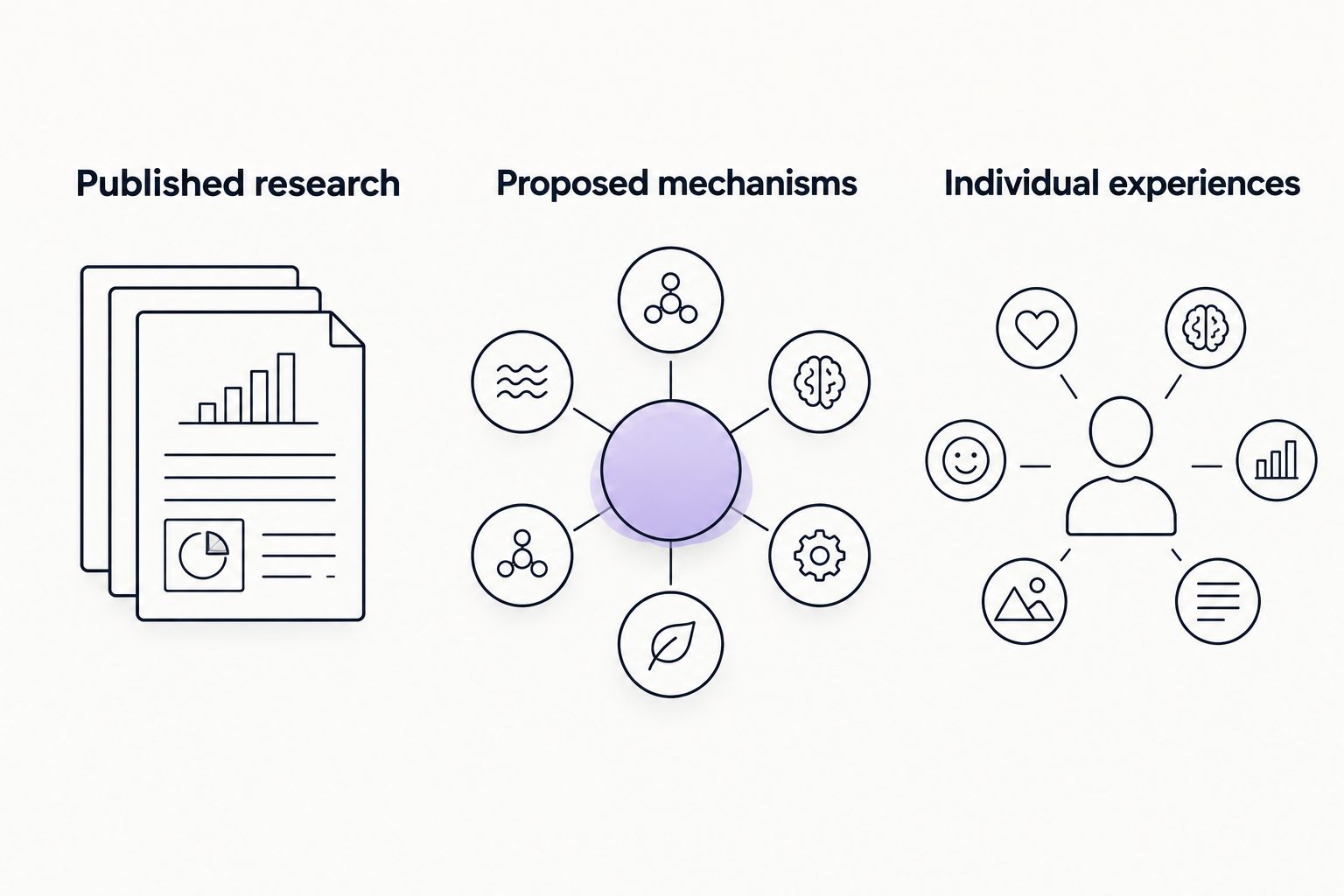
For your 2026 assessment, ask a direct question about every benefit statement: what supports this claim for this exact product and use? If the answer points only to another device, keep the claim out of your service description.
Check the operating plan before purchasing
A device can fit your interests without fitting your business. Resolve these practical questions before making the purchase decision:
- Room fit: Where will the complete setup sit, and what space does the manufacturer require?
- Staff responsibility: Who checks instructions, prepares the space, explains the session, and handles questions outside staff competence?
- Client screening: What warnings and contraindications appear in the current instructions, and when should a client seek qualified medical advice?
- Cleaning and storage: What procedures does the manufacturer specify between uses and when equipment is not in use?
- Service continuity: What are the documented support and servicing arrangements if something needs attention?
For a clinic, assign responsibility rather than leaving it to whoever is nearby. For a spa, make the description understandable without implying medical treatment. For a retreat, check that the planned schedule and setting fit the instructions.
A practical purchase check is to walk through 1 treatment room, 1 complete setup, and 1 client visit on paper. These are planning checkpoints, not performance measurements. Follow the process from preparation through storage and identify every unanswered operating question.
Use a session as decision support, not proof
An optional Tesla BioLights session can help you evaluate the experience you are considering purchasing. Talking with Doug is another optional way to discuss the system and your intended use. Neither step is a prerequisite for every buyer.
Keep your questions concrete. Ask to review the exact offering, its instructions, and the steps involved in using it in your setting. Separate what you observe personally from what you would be justified in promising a client.
If you already have enough verified information to make the decision, proceed through the website. If a session would resolve an experiential question, use it for that purpose—not as a substitute for product-specific evidence.
Review the system before you decide
Explore the offering and identify the product details you need for your clinic or spa.
How the options are ranked
The ranking follows service fit first, then evidence, safety instructions, operating requirements, purchase support, and client communication. The combined system appears first because it directly matches the combined plasma-and-PEMF brief; the other entries address narrower operational priorities.
There is no claim here of comparative clinical performance. Choose the purchasing brief before choosing the device. That prevents an attractive feature from replacing the question of whether the equipment fits your work.
Which PEMF option should you choose?
For an undecided clinic or spa owner in 2026, start by choosing between a combined-modality offering and PEMF alone. Shortlist the S.E.A.D. System when noble-gas plasma and PEMF are both intentional parts of your plan.
Choose a dedicated PEMF search when PEMF alone is the objective. Make portability a priority only when your operating plan requires movement between spaces. In every case, purchase the documented fit—not the broadest promise.
FAQ
What's the best PEMF device for a clinic owner?
The best fit depends on the service you intend to offer and the exact product's documentation. The S.E.A.D. System belongs on a combined plasma-and-PEMF shortlist; a PEMF-only brief calls for a different comparison.
Is a combined plasma-and-PEMF system better than PEMF alone?
A combined system is not automatically better than PEMF alone. Choose it when both modalities match your intended offering, and assess claims using evidence specific to the product and use.
Can a spa use a home PEMF device professionally?
A home-use label does not establish professional suitability. Check the exact manufacturer's instructions, intended users, warnings, and operating requirements before considering use in a spa.
Does published PEMF research prove that the S.E.A.D. System works?
Research on PEMF or other devices does not establish demonstrated benefits for the S.E.A.D. System. Assess the original research and whether it actually concerns the exact system and intended application.
Should I experience a session before buying?
A session is optional decision support, not a purchasing requirement. It can inform your personal assessment of the experience, but it cannot establish expected outcomes for future clients.
What should I ask before purchasing clinic equipment?
Ask for current instructions, warnings, intended-use information, operating requirements, and purchase-support details. Resolve how the complete setup fits your room, staff responsibilities, and client communication.
One last thing
Before you approve the purchase, draft the sentence your receptionist will use to describe the service. If that sentence promises more than the product-specific evidence supports, revise it now. Your clearest buying criterion is whether you can explain the offering accurately without borrowing certainty from unrelated research.