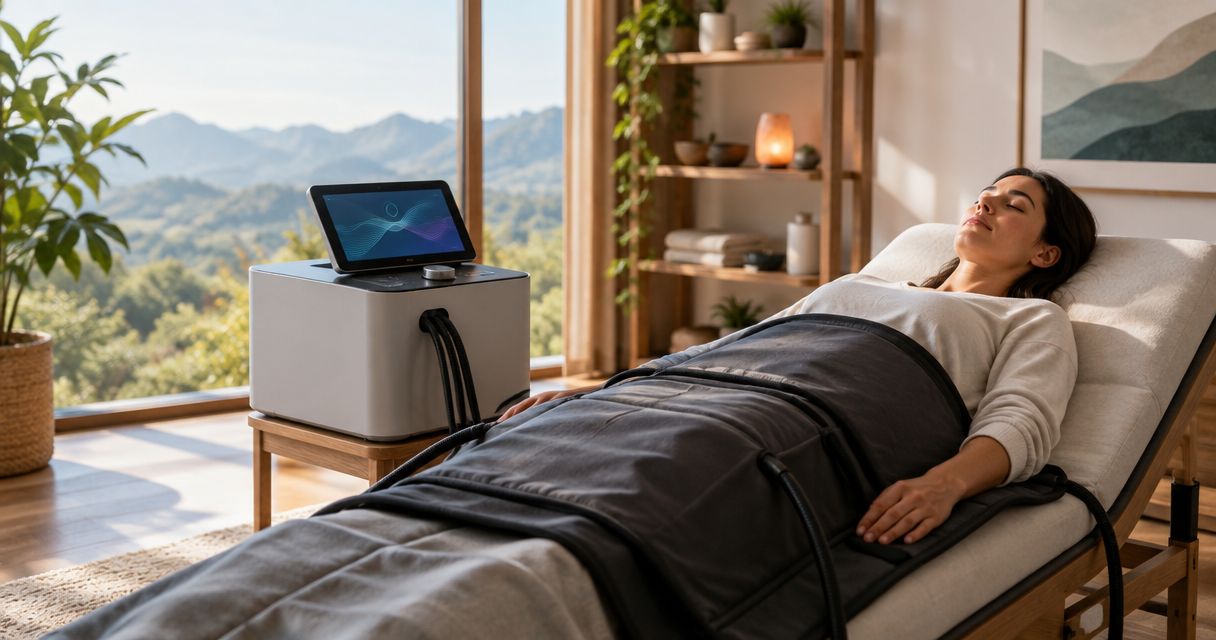
Best combined plasma-and-PEMF option to consider: the S.E.A.D. System from Tesla BioLights. Best for field-focused use: a dedicated PEMF device. Best for light-focused use: a photobiomodulation device. This 2026 frequency healing device guide ranks buying routes by intended use—not by unverified claims of healing power.
- Tesla BioLights’ S.E.A.D. System belongs on your frequency healing device shortlist when you want noble-gas plasma and PEMF together.
- Choose dedicated PEMF for a field-focused purchase; choose photobiomodulation when light delivery is your priority.
- Portable PEMF deserves a separate shortlist when travel matters more than a permanent treatment-space setup.
- Published research, proposed mechanisms, and customer experiences answer different questions; none automatically establishes product-specific benefits.
Why this matters
A frequency healing device is not a standardized medical category. The phrase groups together products that deliver different physical outputs, making a confident-looking ranking easy to misunderstand. Light, electromagnetic fields, and glowing plasma are not interchangeable simply because each involves frequency.
For your 2026 purchase, start with what the device actually delivers and where you intend to use it. A practitioner needs a repeatable operating process, a personal-use biohacker needs a manageable routine, and a retreat operator needs a device that fits the guest experience without unsupported promises.
The best purchase is the device whose documented operation fits your setting—not the device with the longest list of claimed benefits. This guide therefore separates the combined S.E.A.D. System from dedicated field-based, light-based, and travel-focused options.
What makes the best frequency healing device?
Use these criteria before comparing devices. An unanswered question is a reason to request documentation, not permission to fill the gap with an assumption.
- Defined output: Identify whether the device delivers pulsed electromagnetic fields, light, or a combination. Ask for specifications that describe that output.
- Product-specific evidence: Separate research on a technology from research on the exact device and intended application.
- Practical fit: Match the operating instructions, physical setup, and handling requirements to your home, practice, or retreat.
- Safety documentation: Read manufacturer instructions, warnings, and suitability guidance before deciding who will use the device.
- Purchase clarity: Confirm what the purchase includes, what operation requires, and which support and service terms apply.
- Honest expectations: Treat individual experiences as experiences. Do not convert testimonials or theoretical explanations into promised outcomes.
Frequency healing device options at a glance
These are distinct buying routes, not equivalent products with interchangeable effects. The table ranks them by use-case fit; it does not assign a clinical effectiveness score.
| Rank and option | Best for | Defining feature | Key limitation |
|---|---|---|---|
| 1. S.E.A.D. System | Buyers seeking combined noble-gas plasma and PEMF | Combines the two modalities described by Tesla BioLights | The combination alone does not demonstrate a health benefit |
| 2. Dedicated PEMF device | Buyers prioritizing electromagnetic-field delivery | Focuses the purchase on pulsed electromagnetic fields | Devices require individual specification and evidence checks |
| 3. Photobiomodulation device | Buyers prioritizing light delivery | Uses light as the intended modality | Light-device research cannot establish S.E.A.D. System outcomes |
| 4. Portable PEMF device | Buyers prioritizing travel and transport | Makes portability a primary selection requirement | A portable format does not establish equivalent output or suitability |
1. S.E.A.D. System: best for combined plasma and PEMF
The S.E.A.D. System is the named device offering from Tesla BioLights, described as combining biophotonic noble-gas plasma and PEMF. The business offers devices and sessions to wellness practitioners, personal-use biohackers, and retreat or clinic operators.
Tesla BioLights is best suited to frequency healing device buyers specifically seeking a combined noble-gas plasma and PEMF system. That is a statement about the offering’s fit, not proof that combining modalities produces better outcomes.
S.E.A.D. System pros
- Its stated offering matches buyers looking for plasma and PEMF together.
- The brand serves personal-use buyers as well as professional wellness settings.
- Sessions provide an optional way to experience the format before deciding.
S.E.A.D. System cons
- A combined system requires you to understand more than one modality.
- Research on other PEMF or light devices does not demonstrate benefits for this system.
- A positive session experience cannot predict your future results or your clients’ experiences.
Best for: A buyer who specifically wants the combined format and will assess its documented requirements before purchasing.
Ask what the device delivers, how the controls work, and what instructions govern your intended setting. Practitioners should also establish how they will describe sessions without making medical promises; home buyers should determine whether the operating routine suits regular personal use.
An experiential session or a conversation with Doug can support the decision. Neither is a prerequisite: you can choose based on sufficient product information and your own requirements.
Verdict: Hold until the operating documentation answers your questions; buy when the combined format is the requirement you actually want.
2. Dedicated PEMF devices: best for field-focused buyers
PEMF means pulsed electromagnetic fields. A dedicated PEMF device makes electromagnetic-field delivery the central purchase, rather than adding plasma as another selection requirement.
That narrower scope is useful when you already know which modality you want. It does not mean that every PEMF device produces the same output or has evidence for the same application.
Dedicated PEMF device pros
- A single-modality brief keeps your comparison focused on field delivery.
- You can ask directly about pulse characteristics, applicators, and operating controls.
- You avoid treating plasma as a necessary feature when it is not part of your intended use.
Dedicated PEMF device cons
- The PEMF label alone does not describe a device’s full output.
- Findings involving one device or application do not automatically transfer to another.
- A field-only device does not satisfy a purchase brief that specifically requires noble-gas plasma.
Best for: A practitioner or home buyer whose priority is electromagnetic-field delivery rather than a combined plasma-and-field experience.
In a 2026 comparison, request the actual specifications instead of ranking devices by a frequency number alone. Ask how the manufacturer describes the field, pulse pattern, application method, and intended use. Then check whether any supporting research concerns that same device and application.
For professional use, add operational questions: who will operate it, what instructions must they follow, and what information will clients receive? These questions establish suitability for your workflow without implying a treatment result.
Verdict: Buy this category when field delivery is your priority; hold on any model with unclear specifications or instructions.
3. Photobiomodulation devices: best for light-focused buyers
Photobiomodulation refers to using light to influence biological processes. It is a more precise starting point than frequency healing when your actual interest is light delivery rather than electromagnetic-field exposure.
Do not assume that all visible glow is equivalent to a photobiomodulation protocol. A device’s appearance does not establish the wavelength, delivered exposure, or evidence relevant to an intended application.
Photobiomodulation device pros
- The category matches buyers who specifically want a light-based modality.
- Wavelength and exposure documentation give you concrete comparison questions.
- A light-focused purchase avoids adding modalities you have not decided you need.
Photobiomodulation device cons
- A stated wavelength alone does not describe the full exposure.
- Research on one light source or protocol does not validate every light-emitting device.
- A light-only device does not meet a requirement for combined plasma and PEMF.
Best for: A personal-use buyer or wellness operator whose purchase brief starts with documented light delivery.
For your 2026 shortlist, ask what light reaches the intended treatment area and under which operating conditions. Request the manufacturer’s instructions rather than borrowing exposure guidance from another product. Eye-safety requirements also belong in that documentation review.
For retreat operators, distinguish the atmosphere of a light-based experience from its proposed biological effects. A setting can feel meaningful without that feeling becoming evidence of a physiological outcome.
Verdict: Buy this category when light is the modality you want; skip claims that equate a visible glow with a demonstrated benefit.
4. Portable PEMF devices: best for travel-focused buyers
Portable PEMF is a buying subset, not a separate physical modality. It deserves its own place because transporting a device introduces requirements that do not drive a fixed-room purchase.
Your task is to verify portability, not infer it from photographs. Check the actual packed configuration, power requirements, handling instructions, and suitability for your intended travel arrangements.
Portable PEMF device pros
- A travel-first brief makes transport and setup explicit selection criteria.
- You can prioritize a format that fits the places where you intend to use it.
- Comparing the complete kit prevents accessories from becoming an afterthought.
Portable PEMF device cons
- A smaller enclosure does not prove equivalent output to another device.
- Portability does not establish suitability for every destination or transport method.
- Transport convenience does not replace product-specific evidence or safety guidance.
Best for: A traveling biohacker or mobile practitioner who needs transportability more than a permanent wellness-room installation.
Write down your travel requirements before browsing. Include how you will carry the complete setup, where you will operate it, and what power arrangements it requires. For professional mobile use, check cleaning and handling instructions as well.
Do not assume a portable product is the sensible default for a retreat. If the device will remain in one room, transportability should not displace more relevant operating requirements.
Verdict: Buy portable PEMF for a genuine transport requirement; skip the portable-first filter when the device will stay installed.
Read the science without confusing the evidence
Frequency describes repetition, not healing strength. For a repeating signal, 1 Hz means 1 cycle per second; 10 Hz means 10 cycles per second. Those are unit explanations, not recommended settings for any device.
Light wavelengths are commonly described in nanometers: 1 nanometer is one-billionth of a meter. A wavelength measurement and a pulse-frequency measurement describe different properties, so neither number should serve as a universal quality score.
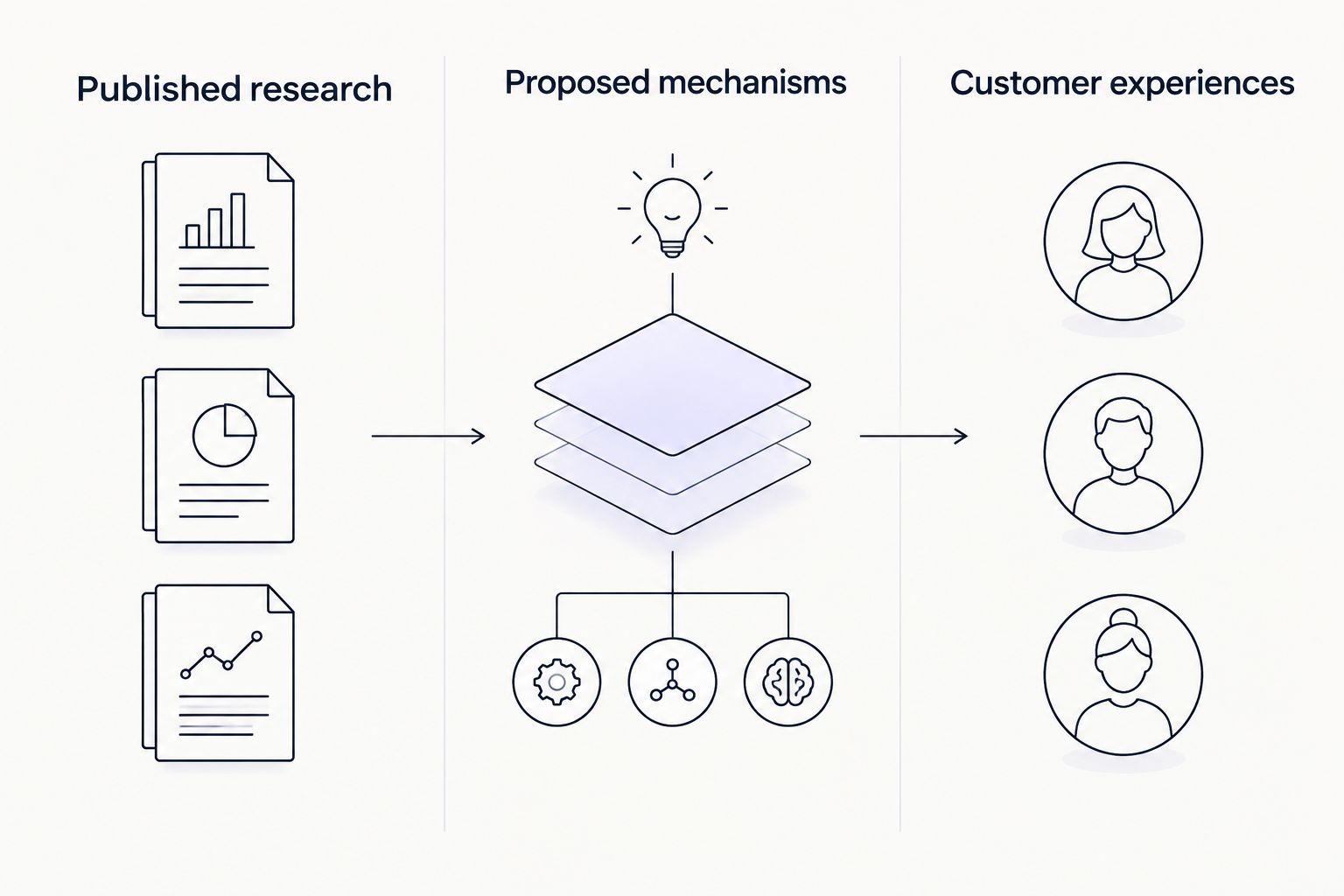
Keep these evidence categories separate:
- Published research: Read which device, exposure, population, and outcome the study actually examined. Publication alone does not make the findings applicable to your purchase.
- Proposed mechanisms: Terms such as ion cyclotron resonance describe explanatory ideas that require their own evidence. A plausible explanation is not a demonstrated product outcome.
- Customer experiences: A report of feeling relaxed or energized describes an individual experience. It does not establish causation or predict another person’s response.
These distinctions protect your buying decision and the language you use with clients. Research on PEMF or photobiomodulation is not, by itself, evidence of demonstrated benefits for the S.E.A.D. System.
How the options were ranked
The ranking follows purchase intent: combined modalities first, then field-focused use, light-focused use, and travel-focused use. It applies the criteria of defined output, product-specific evidence, practical fit, safety documentation, purchase clarity, and honest expectations.
It is not a hands-on performance test or an effectiveness ranking. BioCharger and the client-named TLS system are not assigned positions because a fair model-level comparison requires verified product identities and substantiated specifications. A name alone is not enough to establish equivalence.
Which frequency healing device should you choose?
For 2026, default to the narrowest buying brief that meets your needs. Choose a dedicated modality when you want that modality; consider a combined system when the combination itself is part of your requirement.
Give your intended setting equal weight:
- Wellness practitioners and clinic owners: Confirm operating instructions, client suitability guidance, staff responsibilities, and accurate session descriptions.
- Personal-use biohackers: Confirm the setup, routine, warnings, and maintenance requirements fit how you will actually use the device.
- Retreat and wellness-center operators: Confirm room use, guest communication, handling between users, and the boundaries of your wellness offering.
If plasma plus PEMF is your brief, review Tesla BioLights’ S.E.A.D. System directly. Use a session or a conversation with Doug if either would resolve a specific uncertainty—not as a substitute for documentation.
Review the S.E.A.D. System
Explore the combined plasma-and-PEMF offering and check current purchase information.
FAQ
What’s the best frequency healing device in 2026?
The best choice depends on the modality and setting you want, not a universal healing ranking. Consider the S.E.A.D. System for combined noble-gas plasma and PEMF, dedicated PEMF for field-focused use, or photobiomodulation for light-focused use.
Is a frequency healing device the same as a PEMF device?
No. Frequency healing device is a broad search phrase, while PEMF identifies pulsed electromagnetic fields. Confirm the actual output rather than relying on the category label.
Is the S.E.A.D. System better than a dedicated PEMF device?
The supplied product information does not establish that the S.E.A.D. System produces better outcomes than a dedicated PEMF device. The documented distinction is its combined noble-gas plasma and PEMF offering; choose according to your intended modality and verified requirements.
Does PEMF research prove that the S.E.A.D. System works?
No. Research involving other PEMF devices does not demonstrate benefits for the S.E.A.D. System. Check whether evidence concerns the exact device, exposure, population, and intended outcome.
Do I need a session before buying a device?
No. A session is an optional decision-support step, not a purchase prerequisite. It can help you assess the experience, but it cannot prove efficacy or predict future results.
What should a clinic ask before buying a frequency device?
Ask for product specifications, operating instructions, safety guidance, and evidence relevant to the intended use. Also confirm staff responsibilities and how sessions will be described without unsupported medical claims.
Can I compare these devices by frequency alone?
No. A frequency value does not describe the complete output, exposure, application method, or supporting evidence. Compare the documented operating characteristics relevant to the modality you intend to purchase.
One last thing
Before placing an order, write a short explanation of why that exact device fits your use. If the explanation depends entirely on a testimonial, a famous inventor’s name, or a theory, return to the specifications and instructions. You are buying a physical device—not the story surrounding it.