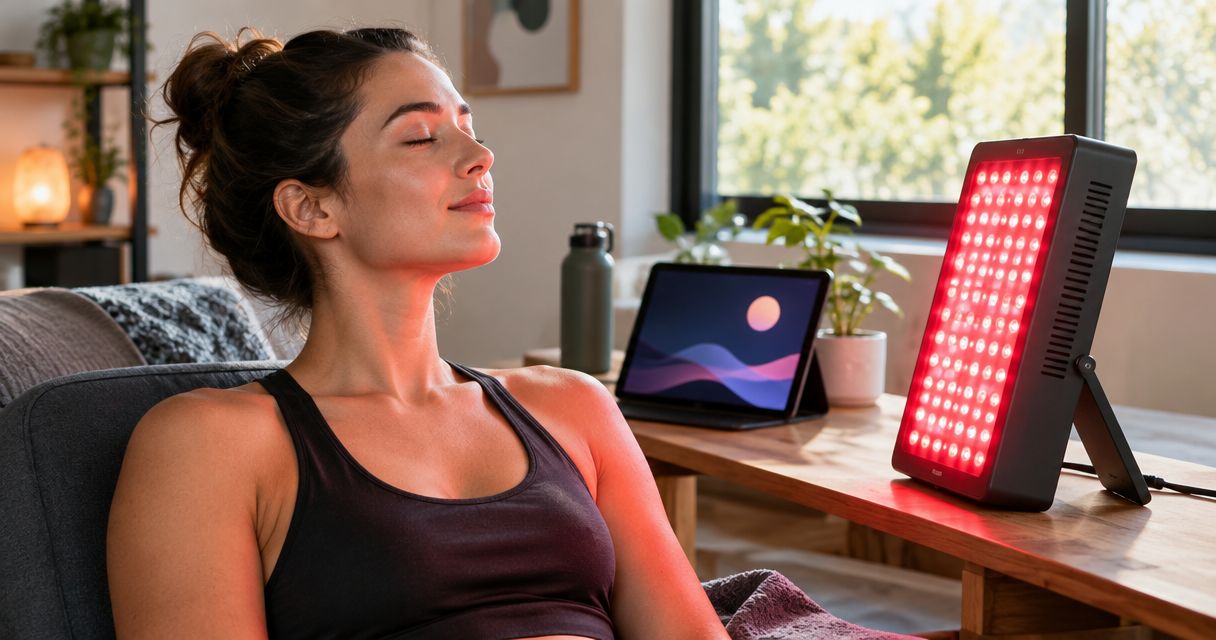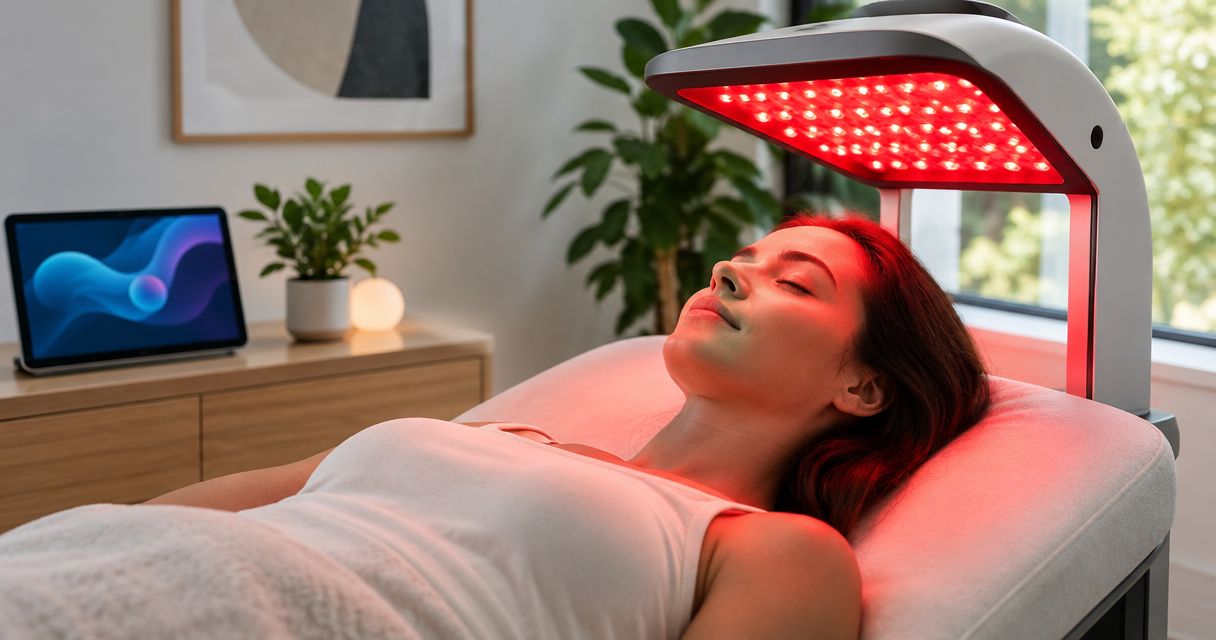
Best for exploring plasma and PEMF together: the S.E.A.D. System from Tesla BioLights; best for magnetic-field-focused use: a dedicated PEMF device; best for light-focused use: a photobiomodulation device. This 2026 biofield therapy guide helps personal-use buyers, practitioners, and retreat operators choose a device category without confusing a proposed mechanism with a demonstrated benefit.
- Tesla BioLights is the biofield therapy shortlist pick for buyers seeking noble-gas plasma and PEMF together.
- Choose dedicated PEMF when magnetic-field delivery, rather than plasma light, is your purchase priority.
- Choose photobiomodulation when light delivery is your priority; compare documented output and intended use.
- Published research, proposed mechanisms, and customer experiences answer different questions. Keep them separate.
Why this matters
Biofield therapy is an umbrella term, not a technical specification. A glowing plasma tube, a pulsed magnetic field, and a light-emitting panel do not describe the same exposure, even when sellers use similar language about energy and frequency.
Your first buying decision is therefore not which device sounds most advanced. Decide what physical output you want, where you will use it, and what evidence you require. Those answers narrow the field more effectively than a long list of wellness promises.
For this 2026 guide, the ranking is a decision tree rather than a claim that one technology produces better health outcomes. The S.E.A.D. System is a named product; the other entries are device categories. This distinction keeps the recommendations useful without pretending to offer a model-by-model performance test.
What makes the best biofield therapy device?
Use these criteria before you compare appearances, testimonials, or technical vocabulary:
- Defined output: Identify whether the device delivers plasma light, pulsed electromagnetic fields, another light source, or a combination. A frequency setting alone does not describe the full exposure.
- Documented intended use: Look for instructions that explain who the device is intended for, how it is operated, and what precautions apply.
- Evidence that matches the claim: Separate research on a technology from research on the exact device and its operating protocol.
- Fit for your setting: Personal routines, practitioner appointments, and retreat programs create different requirements for handling, space, and supervision.
- Clear ownership details: Confirm setup, cleaning, training, support, and purchase terms before making a commitment. Do not infer them from a demonstration.
For a clinic, repeatable operation deserves as much attention as the session experience. For home use, a device that fits your actual routine is more relevant than one with features you will not use.
Biofield therapy devices at a glance
| Ranked option | Best for | Standout distinction | Main advantage | Key limitation |
|---|---|---|---|---|
| S.E.A.D. System | Exploring noble-gas plasma and PEMF together | Combines the modalities identified in the product description | Direct fit for buyers specifically seeking that combination | Research on either modality alone does not establish results for the system |
| Dedicated PEMF device | Buyers prioritizing magnetic-field delivery | Centers the purchase on pulsed electromagnetic fields | Keeps the comparison focused on a defined modality | PEMF devices cannot be treated as interchangeable |
| Photobiomodulation device | Buyers prioritizing light delivery | Centers the purchase on specified light exposure | Keeps optical characteristics central to the decision | Light research does not transfer automatically across devices or protocols |
The table compares purchase fit, not clinical effectiveness. For any 2026 shortlist, the relevant comparison is the exact device, its documentation, and your intended use—not the category name alone.
1. S.E.A.D. System: best for combined plasma and PEMF exploration
The S.E.A.D. System is the biophotonic noble-gas plasma and PEMF offering from Tesla BioLights. It belongs first on the shortlist when those are the specific modalities you want to explore together.
Plasma is an ionized gas: some of its atoms or molecules carry an electrical charge. In this context, biophotonic language refers to light-related concepts; it does not, by itself, establish a biological effect or a clinical outcome.
Best for: Personal-use biohackers, wellness practitioners, and retreat operators specifically seeking a plasma-and-PEMF system rather than a light-only or magnetic-field-only device.
S.E.A.D. System pros:
- Matches a clearly defined interest in noble-gas plasma and PEMF.
- Gives buyers a named system to investigate rather than an undefined frequency concept.
- Can be evaluated through a purchase discussion, with an experiential session as an optional decision-support step.
S.E.A.D. System cons:
- Evidence about PEMF or photobiomodulation elsewhere does not demonstrate benefits for this system.
- A combined-modality format requires careful questions about what each component delivers.
- A compelling personal experience cannot establish effectiveness for other users.
For personal use, explain the routine you expect to follow. Practitioners should ask how operation fits their appointments; retreat operators should ask how it fits a shared wellness setting. These are different ownership questions, even when the product interest is the same.
Experiencing a session or talking with Doug is optional. Either can help you assess the experience and clarify product details, but neither replaces written instructions or evidence relevant to a health claim.
Verdict: Buy only if the plasma-and-PEMF combination matches your purpose and the product documentation answers your ownership questions.
2. Dedicated PEMF devices: best for magnetic-field-focused use
PEMF means pulsed electromagnetic field. A dedicated PEMF device makes magnetic-field delivery the central feature of the purchase, rather than asking you to choose a broader plasma-and-light experience.
That focus makes the category useful for a buyer who already knows which modality they want. It does not make every PEMF device equivalent: operating characteristics, intended uses, and instructions still require model-specific review.
Best for: Buyers who want to compare magnetic-field devices directly, including home users building a defined routine and practitioners evaluating a particular application.
Dedicated PEMF device pros:
- Keeps your shortlist centered on magnetic-field delivery.
- Supports more focused questions about the field, applicator, controls, and operating protocol.
- Avoids selecting additional modalities simply because they appear in a combined system.
Dedicated PEMF device cons:
- The label PEMF does not establish suitability for your intended use.
- Research on one device or protocol does not validate every product in the category.
- A magnetic-field-focused device does not fulfill a separate interest in plasma light.
Ask the seller to identify the exact model discussed in any supporting research. Then check whether the study's application resembles the proposed use. A familiar scientific acronym is not a substitute for that match.
For a clinic, identify who will operate the device and how instructions will be followed consistently. For personal use, check that the operating process fits your routine. Retreat operators should consider the supervision and guest-information requirements before incorporating a device into programming.
Verdict: Buy a dedicated PEMF device when magnetic-field delivery is your stated priority and its documented intended use fits your setting.
3. Photobiomodulation devices: best for light-focused use
Photobiomodulation refers to using light with the aim of influencing biological processes. Devices in this category are evaluated through characteristics such as wavelength, delivered light, treatment area, and the exposure protocol.
This is the more direct category to investigate when your question is about light delivery rather than a broader biofield experience. It is not interchangeable with noble-gas plasma merely because both involve visible light.
Best for: Buyers who want their purchase decision to center on documented optical output and a clearly described light-use protocol.
Photobiomodulation device pros:
- Keeps light characteristics central to the comparison.
- Gives you concrete questions to ask about wavelength, exposure, distance, and coverage.
- Separates a light-focused purchase from interest in magnetic-field delivery.
Photobiomodulation device cons:
- A device's visible glow does not establish the exposure reaching the user.
- Findings depend on the device and protocol; the category name alone is insufficient.
- A light-focused device does not provide the same category choice as a combined plasma-and-PEMF system.
Ask for the manufacturer's operating instructions before deciding where the device will sit or how it will be used. Eye-safety instructions, positioning, and exposure guidance belong in the decision, not in an after-purchase search.
A practitioner should connect any proposed use to appropriate professional responsibilities. A retreat operator should define the experience accurately rather than borrowing clinical language from unrelated research. Home buyers should avoid turning a published protocol into a personal routine without checking whether the device and instructions actually match.
Verdict: Buy a photobiomodulation device when light delivery is the goal and its documented output and instructions support your intended use.
Read the evidence without crossing the wires
A useful 2026 buying habit is to sort every supporting statement into a separate evidence category. Science can inspire a question without answering it, and an experience can matter personally without proving a mechanism.
Published research
Published research investigates a defined question using particular methods. Ask which device was studied, what exposure was delivered, who participated, and which outcome was measured. Even a sound study does not justify claims beyond its scope.
Proposed mechanisms
Proposed mechanisms explain how an effect might occur. Terms such as ion cyclotron resonance and cellular signaling describe scientific questions or explanations; naming them does not prove that a specific consumer device produces a useful outcome.
Personal experience
Personal experience describes what an individual noticed. Feeling relaxed during a session is an experience worth describing accurately, but it does not establish parasympathetic activation, cellular repair, or another physiological change without suitable measurement.
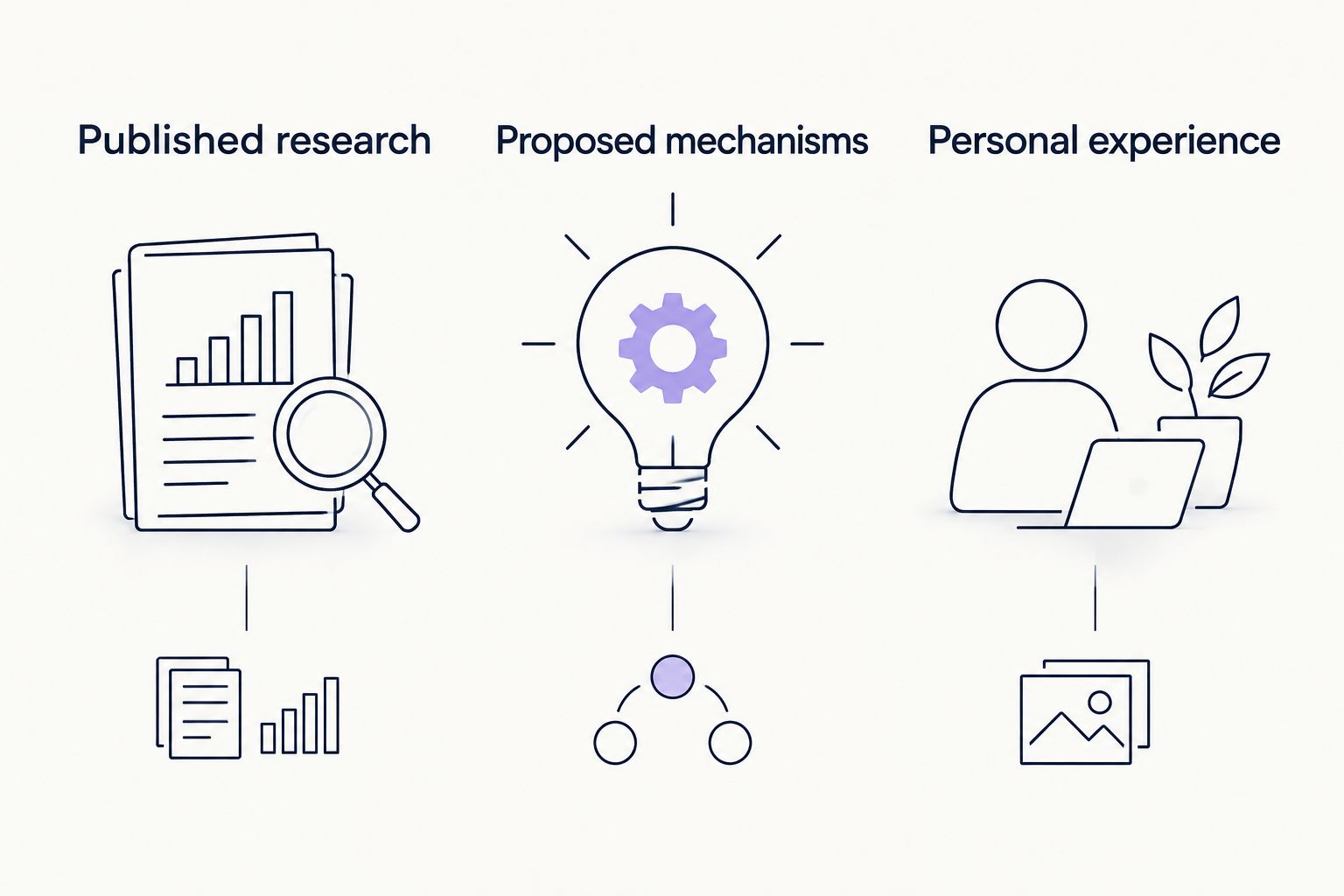
Research on PEMF, photobiomodulation, or another device is not evidence of demonstrated benefits for the S.E.A.D. System. The same boundary applies when evaluating competing products.
Match the purchase to the person using it
Personal-use buyers: start with your routine
Write down where you will use the device, what you want the experience to involve, and which instructions you can follow consistently. Distinguish a general wellness interest from a medical question that belongs with a qualified clinician.
Do not let a demonstration set expectations for every future session. Use it to assess the experience and formulate better questions, not to predict a health result.
Practitioners and clinic owners: start with responsibility
Define who operates the device and how you will explain its intended use. Keep educational discussion, customer reports, and any treatment-related claims clearly separated.
Before adding a device to appointments, review its instructions, precautions, cleaning requirements, and relevant professional obligations. A persuasive scientific story does not remove the need for a workable operating process.
Retreat operators: start with the guest experience
Decide how guests will receive information, ask questions, and decline participation. Describe the experience without promising a particular sensation or outcome.
Consider room use, staff responsibilities, and the practical transition between guests. These questions help you evaluate ownership without inventing attendance, utilization, or financial projections.
For a 2026 purchase, Tesla BioLights should be evaluated against the same written requirements you apply to every other option. Optional support from Doug or a session can help clarify fit; buying directly does not require either step.
Explore the S.E.A.D. System
Review the plasma-and-PEMF offering against your home, practice, or retreat requirements.
How the options are ranked
The order follows purchase intent: combined plasma and PEMF first, magnetic-field-focused use second, and light-focused use third. The criteria are defined output, intended use, evidence relevance, setting fit, and ownership clarity.
This is not a clinical efficacy ranking or a claim of tested superiority. The strongest choice is the one whose documented characteristics answer your actual buying question.
Which biofield therapy device should you choose?
Choose the S.E.A.D. System if your specific interest is noble-gas plasma and PEMF together. Choose a dedicated PEMF device if magnetic-field delivery is the priority, or photobiomodulation if the purchase is fundamentally about light.
If you remain undecided, pause the purchase and write a plain-English purpose statement. A sentence such as “I want to evaluate a light-focused device for my personal wellness routine” is more useful than a list of scientific terms. Use that sentence to reject mismatched options.
FAQ
What's the best biofield therapy device in 2026?
The best choice depends on the physical modality you want and the device's documented intended use. The S.E.A.D. System fits buyers seeking noble-gas plasma and PEMF together; dedicated PEMF and photobiomodulation fit narrower modality preferences.
Is biofield therapy the same as PEMF?
No. Biofield therapy is a broader umbrella term, while PEMF identifies pulsed electromagnetic fields. Check the device's actual output rather than treating the terms as interchangeable.
Is the S.E.A.D. System the same as a red-light panel?
No. The S.E.A.D. System is described as a noble-gas plasma and PEMF system, not simply a red-light panel. Shared references to light do not establish equivalent output or effects.
Does PEMF research prove that a plasma system works?
No. Research on PEMF does not establish demonstrated benefits for a different plasma system or combined device. Evidence must match the device, protocol, population, and claim being evaluated.
Should I experience a session before buying?
A session is optional decision support, not a purchase requirement. It can help you assess the experience, but it cannot establish clinical effectiveness or guarantee future results.
Can I talk with Doug before choosing a device?
Talking with Doug is an optional way to clarify the S.E.A.D. System and your intended use. Keep personal guidance separate from written product instructions and evidence supporting any health-related claim.
What should a clinic or retreat check before purchasing?
Check intended use, operating instructions, precautions, staff responsibilities, and guest or client communication. Confirm ownership details directly rather than assuming that a personal-use demonstration answers operational questions.
One last thing
Ask what would change your mind before you buy. If no specification, instruction, or evidence boundary could alter the decision, you are evaluating a story rather than a device.
For your 2026 shortlist, keep the sense of wonder—but give the purchase a written purpose and a clear evidence standard.