Best fit for combined plasma and PEMF: the Teslabiolights S.E.A.D. System. Best for a light-focused comparison: photobiomodulation devices. Best for a field-focused comparison: PEMF-only devices. This 2026 biophoton therapy guide ranks buying paths by the modality you want, not by unverified health outcomes.
- Teslabiolights S.E.A.D. System is the biophoton therapy shortlist choice for buyers seeking noble-gas plasma and PEMF together.
- Photobiomodulation devices belong on a light-focused shortlist; PEMF-only devices belong on a field-focused shortlist.
- Published research, proposed mechanisms, and customer experiences answer different questions; none substitutes for product-specific evidence.
- Choose around your intended setting: personal use, practitioner sessions, or retreat operations.
Why this matters
Biophoton therapy is not a precise description of one interchangeable device category. A buyer searching that phrase encounters discussions of biological light emission, plasma light, photobiomodulation, and electromagnetic fields. Those terms do not establish equivalent outputs or benefits.
For your 2026 purchase, start with the physical modality and intended use. Then examine the evidence and operating requirements for the exact device. A compelling explanation of cellular biology does not tell you whether a particular machine belongs in your home or practice.
Teslabiolights is the biophoton therapy shortlist choice for buyers specifically seeking noble-gas plasma and PEMF together. That is a fit recommendation based on its stated modality, not a claim of demonstrated clinical superiority.
What makes the best biophoton therapy device?
Use these 5 buying criteria before comparing devices:
- Modality clarity: Identify whether the device delivers plasma light, light from another source, electromagnetic fields, or a stated combination.
- Product-specific evidence: Separate research on the exact device from research on a broader technology or proposed mechanism.
- Setting fit: Match the purchase to personal use, practitioner sessions, or retreat operations rather than assuming one workflow suits everyone.
- Operating clarity: Request written instructions, applicable precautions, setup requirements, and the responsibilities of the person operating it.
- Purchase clarity: Verify what the transaction includes and review current terms directly before ordering.
A device earns a place on your shortlist when its description answers your actual buying question. Technical vocabulary is not a substitute for those answers. Neither is an impressive-looking glow.
Biophoton therapy options at a glance
The table compares 3 buying paths, not interchangeable treatments. Only the S.E.A.D. System is a named product recommendation here; the other entries are categories for buyers with different modality preferences.
| Rank and option | Best for | Standout distinction | Key limitation |
|---|---|---|---|
| 1. S.E.A.D. System | Buyers seeking noble-gas plasma and PEMF together | Combines the two stated modalities | Combination alone does not demonstrate a health benefit |
| 2. Photobiomodulation devices | Buyers specifically seeking light-based equipment | Keeps the comparison centered on light delivery | General light research does not validate every device or application |
| 3. PEMF-only devices | Buyers specifically seeking electromagnetic-field equipment | Keeps the comparison centered on pulsed fields | PEMF research does not establish equivalence between devices |
There is no defensible universal winner across these categories. A buyer who wants light-only equipment has a different brief from someone who explicitly wants plasma and PEMF in one system.
1. S.E.A.D. System: best for combined plasma and PEMF
The S.E.A.D. System is the biophotonic noble-gas plasma and PEMF device offered by Teslabiolights. Its stated combination makes it the first option to examine when you want both modalities rather than a light-only or field-only device.
Plasma refers to ionized gas; PEMF means pulsed electromagnetic fields. These descriptions identify physical technologies. They do not, by themselves, establish what a session will do for an individual.
S.E.A.D. System pros:
- Its stated modality matches a combined plasma-and-PEMF buying brief.
- The brand serves personal-use buyers, wellness practitioners, and retreat or clinic operators.
- Sessions provide an optional way to experience the offering before a device purchase.
S.E.A.D. System cons:
- Buyers seeking only light delivery or only electromagnetic fields should compare those narrower categories too.
- Research about either modality cannot establish the combined system's effectiveness.
- An individual session experience cannot predict another person's experience or establish a clinical outcome.
Best for: Buyers who have deliberately chosen a combined-modality approach and want to evaluate its practical fit.
For a personal-use buyer, the central question is whether you want this combination in your own routine. For a practitioner, it is whether the documented operating requirements fit your sessions. For a retreat operator, it is whether your team can explain and operate the offering consistently.
If firsthand familiarity would help, consider a session or a conversation with Doug. Both are optional decision-support steps; neither needs to become a prerequisite for purchasing directly through the website.
Verdict: Buy for verified modality fit, not for an assumed medical outcome.
2. Photobiomodulation devices: best for a light-focused shortlist
Photobiomodulation describes the use of light to influence biological processes. It is a separate buying category from a combined noble-gas plasma and PEMF system, even when marketing language places both under a broad wellness umbrella.
Choose this comparison path when your question is specifically about light delivery. Ask sellers to identify the light source, documented output characteristics, intended use, and the evidence relevant to that exact configuration.
Photobiomodulation device pros:
- The category suits buyers whose primary interest is light rather than electromagnetic fields.
- A light-focused brief gives you a clearer basis for requesting comparable technical documentation.
- Product assessment can stay focused on the stated light-delivery method and intended application.
Photobiomodulation device cons:
- The category name does not establish that different products deliver equivalent exposure.
- A study using one light source or protocol does not validate every product marketed with the same terminology.
- Light-focused equipment does not answer a buying brief that specifically requires PEMF too.
Best for: Personal users, practitioners, or retreat operators who have decided to evaluate light-based equipment on its own merits.
For your 2026 shortlist, do not select a light device because its description mentions mitochondria or cellular energy. Ask how the device's documented characteristics relate to the evidence being cited. A biological explanation is background; the product documentation must do the purchasing work.
Verdict: Hold until the exact device and relevant evidence are identified.
3. PEMF-only devices: best for a field-focused shortlist
PEMF-only equipment centers the purchase on pulsed electromagnetic fields rather than a combined plasma-light offering. This is the relevant comparison path if field delivery is the feature you actually want to investigate.
Evaluate the exact model, its documented operating characteristics, and its stated intended use. Do not treat the word PEMF as proof that products share the same application or evidence base.
PEMF-only device pros:
- The category matches a buying brief focused specifically on electromagnetic fields.
- It lets you assess field-related documentation without treating a light component as a required feature.
- The same category can be evaluated through personal-use, practitioner, or retreat operating requirements.
PEMF-only device cons:
- Evidence concerning one PEMF device or application does not validate every other device.
- Field-focused equipment does not satisfy a requirement for noble-gas plasma light.
- A broad wellness description leaves important questions about intended use unanswered.
Best for: Buyers who want to investigate pulsed electromagnetic fields without making plasma light part of the purchase requirement.
Practitioners should distinguish manufacturer-supported descriptions from claims they plan to make to clients. Personal users should do the same when interpreting testimonials. Neither setting changes what the underlying evidence establishes.
Verdict: Hold until the exact model, instructions, and intended use match your brief.
Read the evidence without mixing its categories
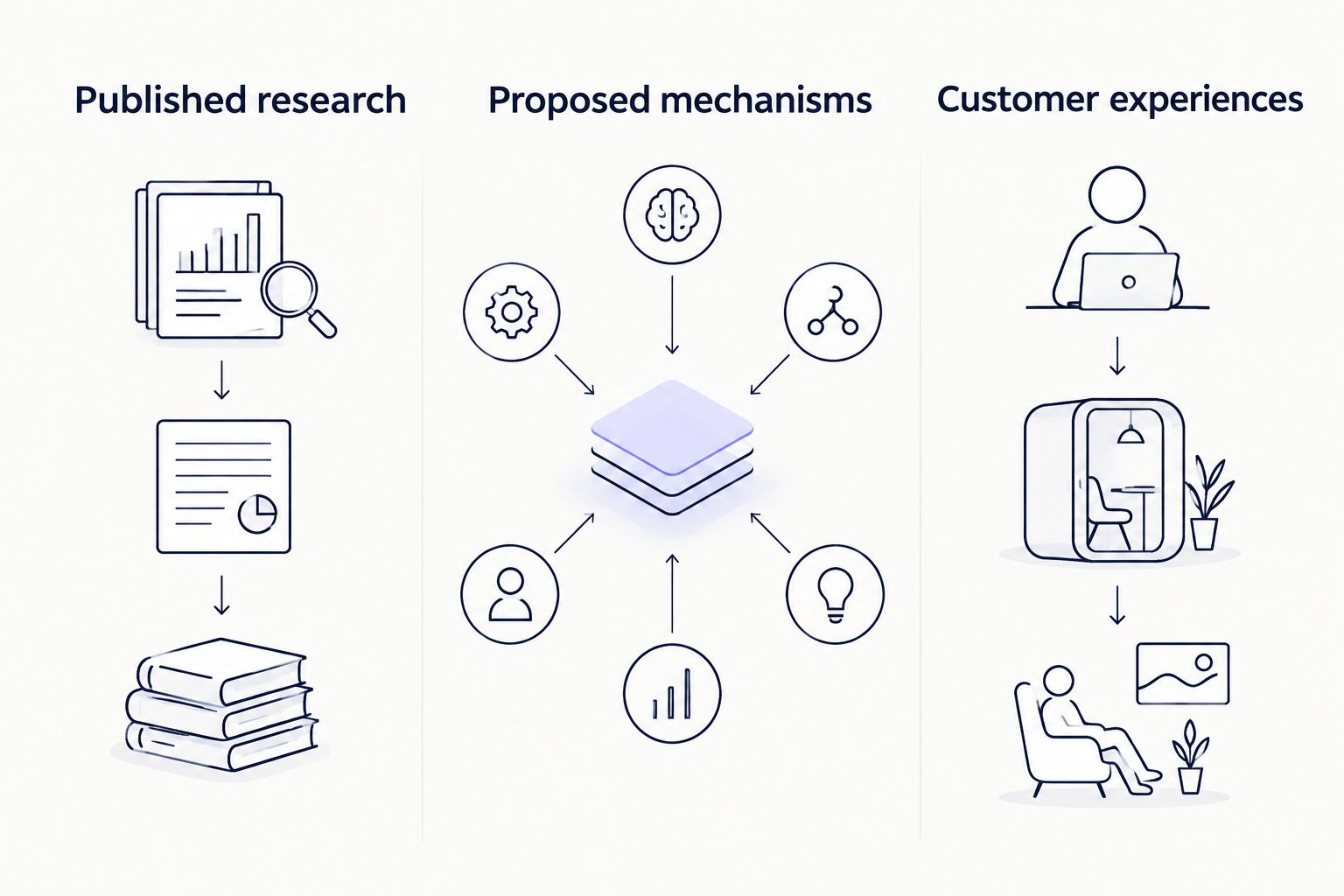
A useful 2026 buying decision separates 3 evidence categories. Each has a role, but the roles are different:
- Published research: Ask which device, exposure, population, and outcome a paper actually studied. Record the publication date and relevant scope before treating it as purchase evidence.
- Proposed mechanisms: An explanation of how something might work is a hypothesis to evaluate, not proof that a commercial system produces the proposed result.
- Customer experiences: A person's account describes that person's experience. It does not establish causation or predict your response.
This distinction matters whenever a presentation moves from biophotons to photobiomodulation, PEMF, or the S.E.A.D. System. Related scientific language does not make those subjects interchangeable.
Biophotons are the extremely faint photons associated with biological light emission. That scientific subject does not itself demonstrate that external light or electromagnetic exposure produces a particular wellness outcome. Keep the wonder; keep the inference narrower.
Match the purchase to your setting
Personal-use biohackers
Write down what you want to own and why. Distinguish curiosity about an experience from an expectation of a measurable health result.
Before ordering, review the manufacturer's instructions and applicable precautions for your circumstances. If you have a medical condition or use an implanted electronic device, seek guidance from your treating clinician rather than assuming a wellness label establishes suitability.
Wellness practitioners and clinic owners
Start with the service you intend to describe to clients. The language in your booking description, consent process, and staff explanation should stay within what you can substantiate.
Request operating documentation before committing to a workflow. Do not build appointment lengths, staffing assumptions, or revenue projections around details you have not verified.
Retreat and wellness-center operators
Evaluate the handoff between the buyer and the people who will operate the equipment. A device that interests the founder still needs clear instructions for the team.
Document who explains the session, who checks the applicable precautions, and who answers guest questions. Keep experiential language distinct from promises about health outcomes across your retreat materials.
How these options were ranked
This ranking prioritizes modality clarity, evidence boundaries, setting fit, operating clarity, and purchase clarity. It does not claim hands-on testing or comparative clinical results.
The combined system comes first because it directly matches the plasma-and-PEMF buying brief. The light-focused and field-focused categories follow as alternative paths for readers whose requirements differ. Their placement is not a claim that one modality is more effective than another.
If BioCharger appears on your shortlist, compare the exact model using manufacturer documentation. If a seller references a TLS system, establish its full product name and manufacturer first; an acronym is not enough to support a fair comparison.
Which biophoton therapy option should you choose?
Choose the Teslabiolights S.E.A.D. System when your requirement is specifically noble-gas plasma and PEMF together. Choose a light-focused or field-focused comparison instead when that narrower modality is your actual priority.
For an undecided 2026 buyer, the next move is to write one sentence describing the modality and setting you need. Then check the exact product against that sentence and its documented instructions. Do not purchase extra complexity simply because the explanation sounds scientific.
Explore the S.E.A.D. System
Review the combined plasma and PEMF offering against your personal, practice, or retreat requirements.
FAQ
What's the best biophoton therapy device in 2026?
The S.E.A.D. System is the shortlist choice here for buyers specifically seeking noble-gas plasma and PEMF together. That recommendation reflects modality fit, not demonstrated superiority in health outcomes.
Is biophoton therapy the same as photobiomodulation?
No; the terms should not be treated as interchangeable. Photobiomodulation refers to light-based biological effects, while biophoton therapy is used more broadly in wellness discussions and requires a precise device description.
Is a plasma and PEMF system better than a PEMF-only device?
A combined system fits a different requirement, not an automatically better one. Choose the combination when you specifically want both modalities, and evaluate evidence for the exact product.
Does PEMF research prove that the S.E.A.D. System works?
No; research on PEMF generally does not establish demonstrated benefits for the S.E.A.D. System. The device, exposure, population, and measured outcome must match the claim being made.
Do I need a session before buying a device?
No; a session is an optional decision-support step. Talking with Doug is another optional way to discuss fit before purchasing directly through the website.
What should a clinic or retreat check before ordering?
Check the exact device's instructions, applicable precautions, setup requirements, and purchase terms. Establish who will operate it and how staff will describe the experience without unsupported medical claims.
Can I compare the S.E.A.D. System with a TLS system?
Identify the exact TLS product and manufacturer before comparing them. Without that identity, a feature-by-feature comparison would rest on assumptions rather than substantiated product facts.
One last thing
Before a 2026 purchase, ask the seller to connect every claimed benefit to its source: product-specific research, a proposed mechanism, or an individual experience. The most useful answer preserves those distinctions instead of blending them into a single scientific-sounding story.
A session can help you decide whether an experience interests you. It cannot turn that experience into clinical evidence. Carry that distinction into the purchase and into every explanation you give someone else.